
Philip Morris
Nudging for sustainable behavior
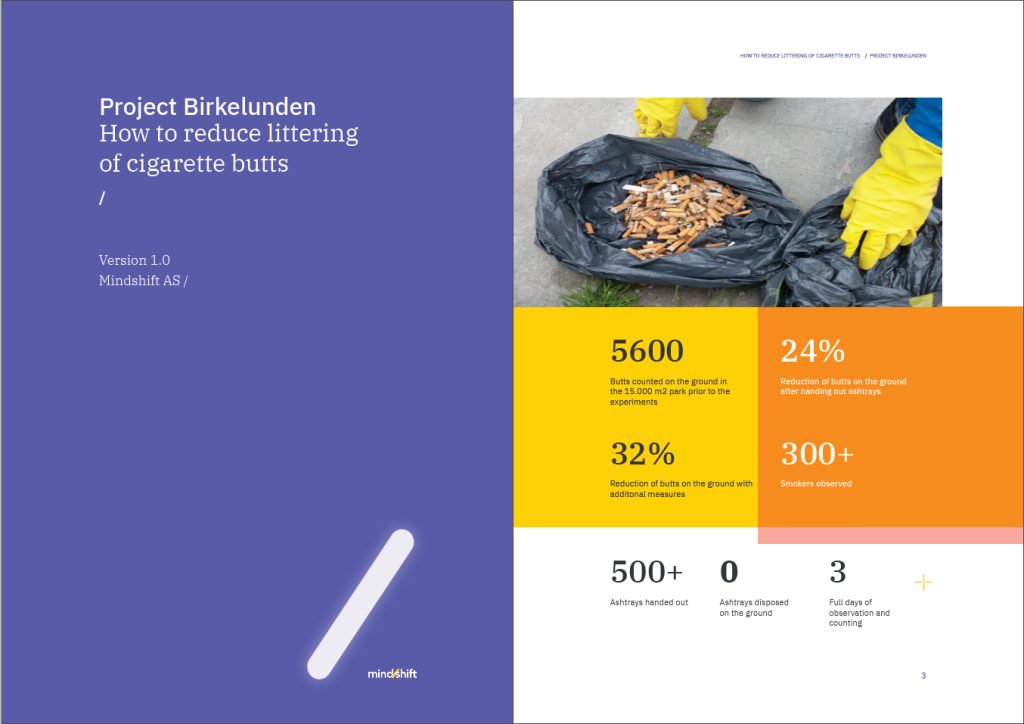
In 2014, smoking became illegal inside pubs, restaurants, nightclubs and most workplaces. Smokers were forced out on the streets, resulting in an increase in littering and negative environmemtal impact. How do you change littering behaviour and how can you prove the change is statistically valid?
Nudging for sustainable behavior
What happens if we can change environmental behaviour using contextual nudges? How can we easily guide people to live more sustainable?
There are several reasons why people litter. Littering is a prime example of how people are often inconsistent in what we say we will do and what we actually do – called the intention‑behaviour gap. Most people have an intention not to litter, but do it anyway – what could be the reasons for this?
- Habits: The majority of our daily actions and decisions are automatic, unconscio‑ us and based on our habits. This is especially true for repetitive actions, such as smoking.
- «The path of least resistance»: Humans tend to do what is easiest. We walk the shortest path instead of following the road and throw the butt on the ground inste‑ ad of searching to find a trash can. Accordingly, the distance to the nearest bin is an important determinant of littering behaviour.
- Knowledge and awareness: The knowledge and awareness of the negative con‑ sequences of littering affect behaviour. This is especially true in combination with personal attitudes and beliefs.
- Attitudes and beliefs: The attitude towards your own responsibility for reduction of littering, and the belief that that your own personal actions have an impact on the environment affects your behaviour (locus of control).
/
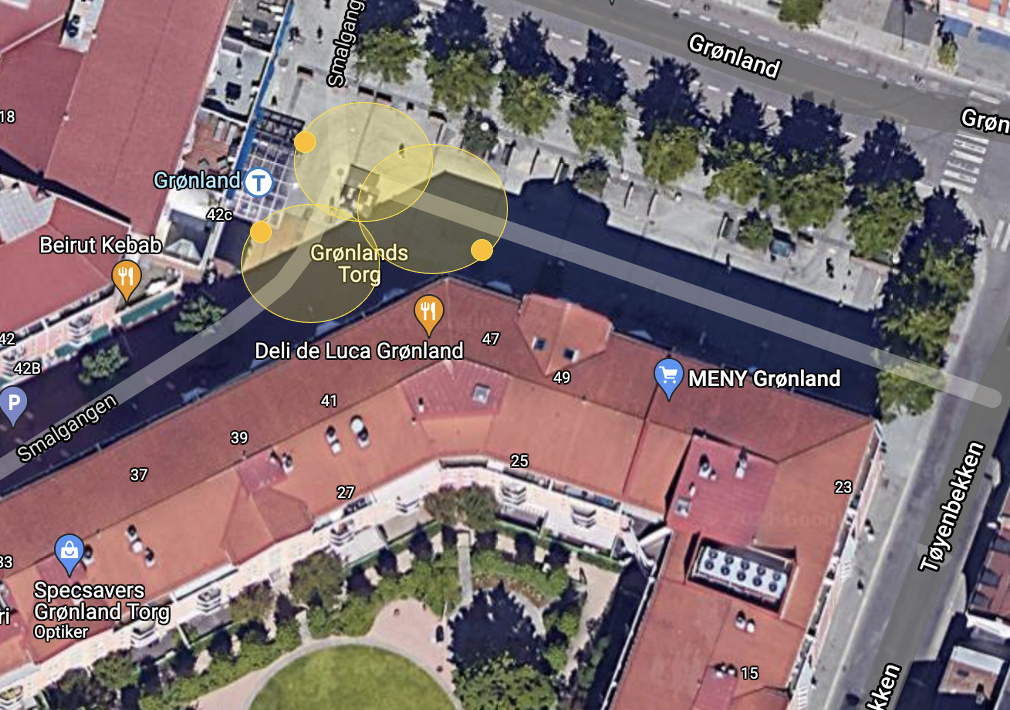
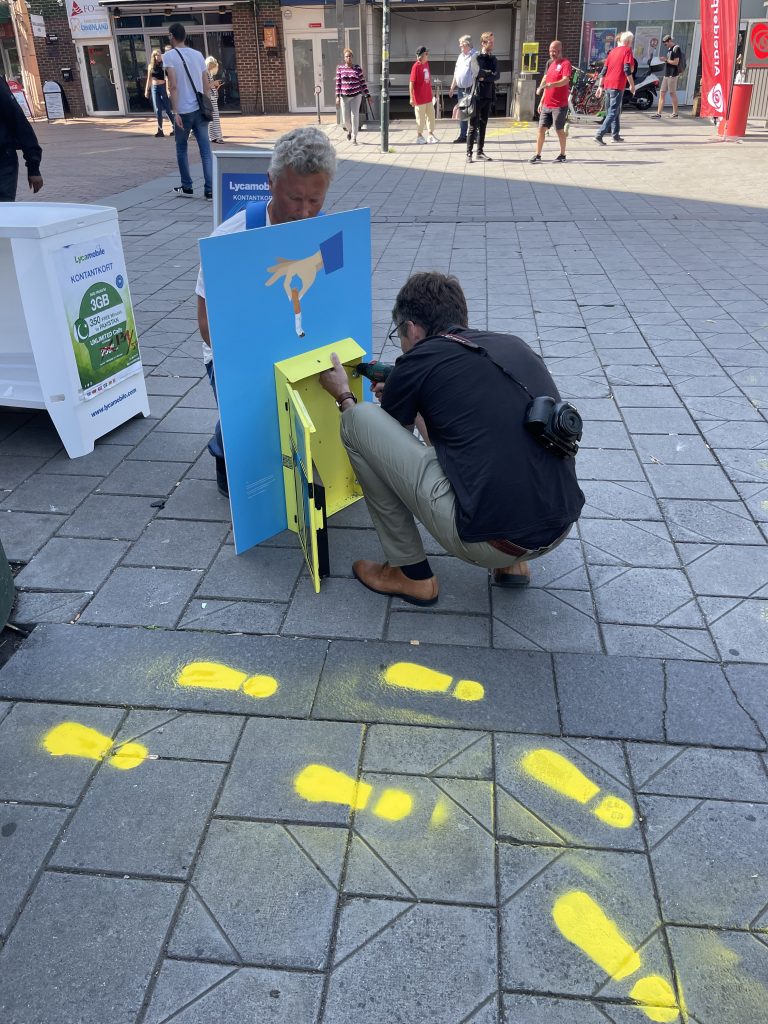
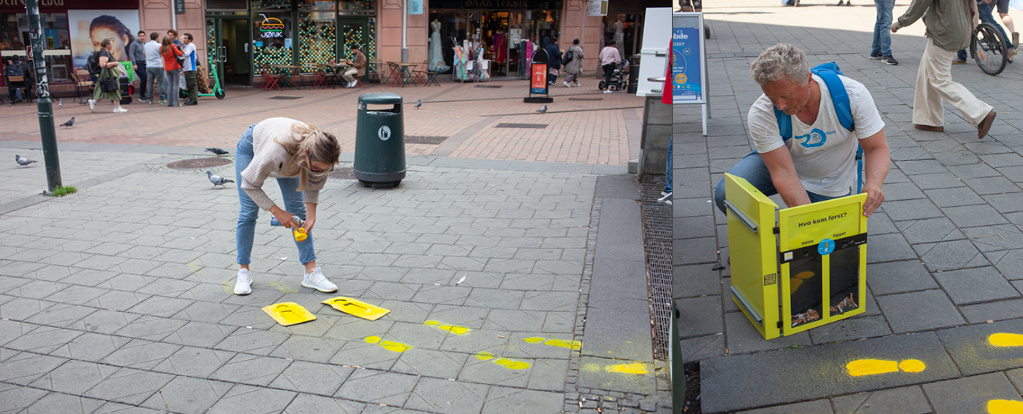

Picture: Data collection methods are important. The methodology and analytical approach determines how the data may be used and what explanations they can generate.
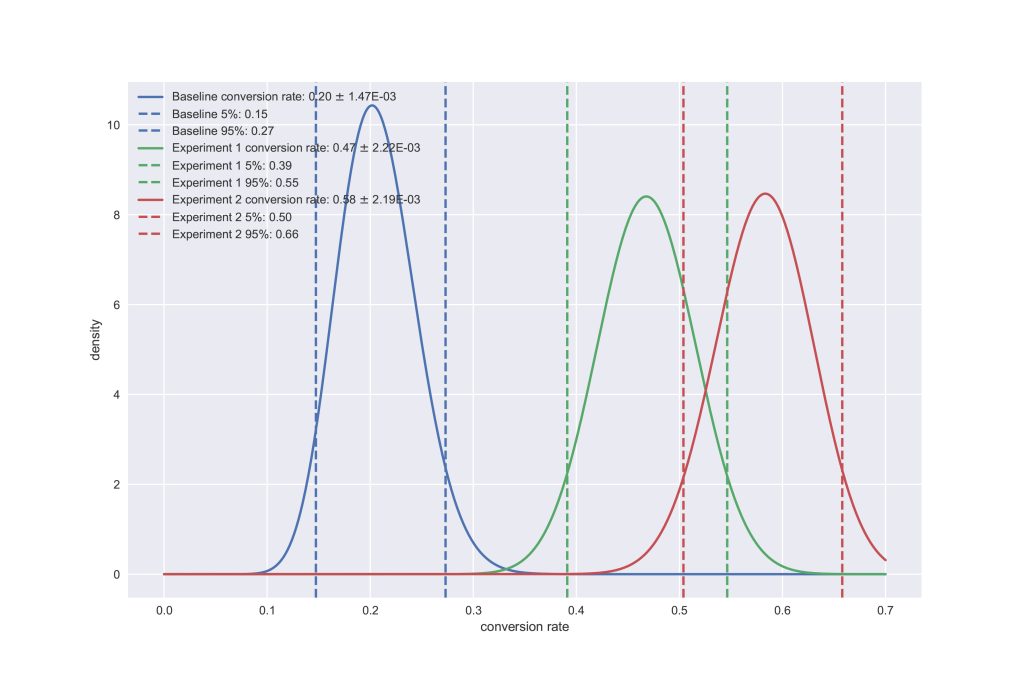
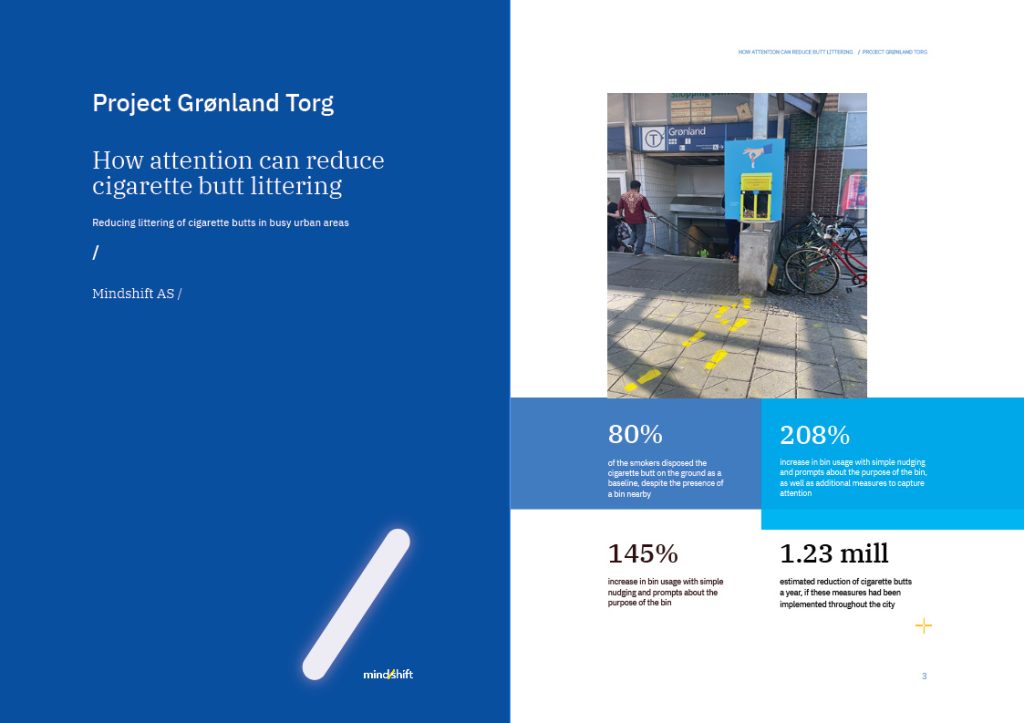
The project demonstrates the importance of attention if you want to change behaviour in a busy environment, as well as the effectiveness of nudging techniques ‑ influencing people through targeted behavioural design.
*Estimation based on numbers from Sneipfritt indicating that 2.4 million cigarette butts are thrown on the ground every year in Oslo
“
Ved å introdusere noen enkle «nudging»-tiltak oppnådde vi en økning i den ønskede atferden på 208%, det vil si økning i andelen røykere som stumpet røyken i avfallsbeholderen. Om vi hadde satt i verk samme tiltak over hele Oslo og antar samme effekt overalt, ville det redusert antall sneiper på bakken med 1,23 millioner årlig*). Prosjektet viste tydelig hvor viktig det er med oppmerksomhet når man skal forsøke å endre en målgruppes atferd i et miljø med mange mennesker og mye aktivitet, i tillegg til hvor effektive «nudging»-teknikker kan være som virkemiddel i atferdsdesign.
”
*) Antall basert på tall fra Sneipfritt, som estimerer at 2,4 millioner sneiper blir kastet på bakken hvert år.